
Put On The Helmet

 and take the helmet...(Ephesians 6:10)
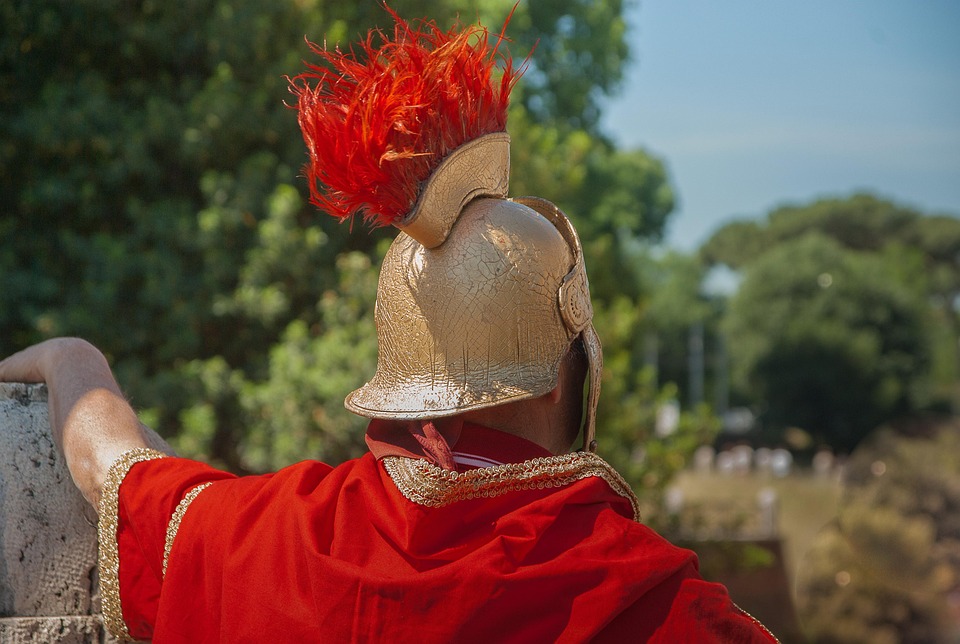
In this verse, the word salvation is not seen in this Greek text. Paul writes elsewhere because we belong to the day, put on "the helmet of the hope of salvation, for God has not appointed us to wrath but to acquire salvation through our Lord Jesus Christ, who died for us so whether we are awake or asleep, we live together with him."(1 Thessalonians 5:8)

The helmet of the hope of our salvation comes from the confidence that we live together with Christ if we are awake or asleep. Like Lazarus whom Jesus said was asleep, do we truly die if we believe? But we are of the day, the light, so whether asleep or awake we live with Christ. Paul writes, "according to my expectation and hope because I will not be at all ashamed, rather with all boldness now as always Christ will be magnified in my body, whether by life or by death. For me to live is Christ, to die is gain."(Philippians 1:20-21)

regarding your former way of life, you were taught to put away your old self, the one corrupted and deceived according to its desires, that now renewed in the spirit of your minds. (Ephesians 4:22-23)

The helmet has a lot to do with the mind, how we think and reason. The old man thinks according to the desires of the flesh, whereas the new man, the spiritual man thinks accordingly to that above, where he has been raised and seated with Christ Jesus. But we see a process of transformation that renews the mind, so that we have the spiritual mind, the mind of Christ. Saying I have the mind of Christ is true of my spirit, but unless my mind is renewed I still have a carnal mind, I am still a child. Do the scriptures support this concept? that Christians can have carnal minds?

And I, brothers, I am not able to speak to you as spiritual people, but as people of the flesh, as children in Christ. (1 Corinthians 3:1)

We see important concepts of growth in the scriptures. And though we can say our spiritual man has the mind of Christ, we must grow up in the knowledge of Jesus, into the full measure of the stature of His image, into adulthood, to have such a mind. Assurance of salvation is very important to a child, he is being rooted and grounded in faith and love, having the testimony of spirit and blood. A child knows the Father and that his sins are forgiven. At a higher level of maturity in growth, we put on the helmet of a renewed mind. Without such a mind, you can not discern God's will nor can we be obedient to it.

Brothers do not become children in your thinking, rather of evil be infants, now in your thinking be adults. (1 Corinthians 14:20)

It is the opposite, as children, we are more carnal in thinking but as we become adults our thinking or doing evil becomes innocent. The carnal is hostile towards God and can not subject itself to the laws of God which are spiritual. Paul writes of these principles and that sin dwells in our flesh with evil being near us. (Romans 7:17-20) Peter writes the carnal, fleshly desires wage war against our soul. (1 Peter 2:11) Thus he writes the goal of faith, is the salvation of our soul. (1 Peter 1:9) This implies a growth process whereby I put off the old and put on the new man, renewed in the spirit of my mind, the one renewed in knowledge after its creator.

It is spiritual warfare, as evil takes advantage of the weakness of the flesh, the carnal mind, to bring us into captivity to sin in the flesh. Putting on the helmet plays an important role in this warfare against his schemes. The cares of this world are one way the devil attacks the mind. If we focus on earthly things and let thoughts enter our minds so as to become anxious and fearful, we have not put on the helmet and are leaving ourselves exposed to the devil's attacks. Our thinking this way can become habitual and harmful. The devil can even attack us with worrisome dreams, fearful and anxious thoughts, so when he does put on the helmet, along with the full armor of God.

therefore take up the full armor of God so that you have the power to stand in the evil day, having worked out the whole, stand. (Ephesians 6:13)

When you put on the armor there is a working out, bringing into effect, the Greek word meaning to work out; to effect, produce, bring out as a result; to work, practice, realize in practice.* You bring it into effect so that you can stand. Think of it as practice, you do not put armor on a soldier and send him into battle, no, you realize in practice. You will fight accordingly, like you train. No reading the word of God, no increase in faith, no victory. The weapons of our warfare are not of the flesh but have divine power to destroy strongholds. (2 Corinthians 10:4) Put on the helmet. Think about God's promises, cast your cares upon him, for he cares for you. Do not worry about tomorrow it has its own troubles. Look at the sparrows, he cares for them, how much more does he care for you. Think about the many blessings we have in Christ. (Ephesians 1) 

Indeed, we felt we were under the sentence of death, in order that we would not trust in ourselves, but in God, who raises the dead. (2 Corinthians 1:9)

In the suffering we develop the mind of Christ, who suffered, thus we participate, have fellowship in his suffering. It is not a meaningless thing, but it draws us near to God, to trust in him, as we are being conformed to his death, also we are conformed to his life, being raised in newness of life. "For your sake, we are being killed all the day long; we are regarded as sheep to be slaughtered."(Romans 8:36) Oh to have the mindset that rejoices in suffering. Put on the helmet.


Popular (last 30 days)

Blessed Are The Forgiven

Blessed! the one whose lawless deeds are forgiven and the one whose sins are covered over, blessed is the man whom sin, the Lord will not consider . * Paul writes David foresaw and spoke " blessed is the one whose transgression is forgiven, whose sin is covered . *  Blessed, is the one whom sin is not considered, this word considered  means "to credit, count, reckon, to set down as a matter of account; regard, think, consider." This blessing comes through faith and according to grace, " also David speaks of the blessedness of the one to whom God considers righteousness apart from works ." *  The word for  lawless deeds speaks of the violation of the Law and the word for sin  speaks of missing the mark of God's righteousness. Blessed are those who (by faith in Christ according to grace) have been forgiven. In Him receiving the redemption through his blood, the forgiveness of trespasses according to the riches of His grace . * This fundamental ...

Spirit of Life

" Indeed, the law of the Spirit of Life in Christ Jesus liberates from the law of sin and death ." 1 This word for liberates "I free, set free, liberate" is from a root word meaning free, exempt, not bound by an obligation. As partakers of God's divine nature, being born of Spirit, we are no longer obligated to the sinful nature but to righteousness which is God's nature. When we believe we receive the Spirit of promise, a guarantee of our inheritance, a great testimony that we are His children, it is a Spirit of Life. " Truly, truly, I say to you, whoever hears my word and believes him who sent me has eternal life. He does not come into judgment, but has passed from death to life." 24 The Son came not to condemn the world but to save it. "One trespass   led to condemnation for all men, so one act of righteousness leads to justification and life for all men. " 6 " He was delivered over to death for our trespasses and wa...

All Who Are Thirsty

“ Come, everyone who thirsts, come to the waters;  and he who has no money,  come, buy and eat!  Come, buy wine and milk  without money and without price.  Why do you spend your money for that which is not bread,  and your labor for that which does not satisfy?  Listen diligently to me, and eat what is good,  and delight yourselves in rich food. .." (Isaiah 55). " Come, buy wine and milk without money and without price ." Buy is defined as to acquire the ownership of by giving an accepted price or consideration therefore; to accept or believe as true .[ 1 ] When we buy something we consider the price that we must pay, we accept this and purchase the thing we have considered worthy of the sacrifice we make in payment. W e can not buy, with money or price, redemption from t his tragic flaw we are born into. However Jesus paid the price for us, so we buy or accept through consideration, the Greek word is  logizomai.[ 2] ...

The Tripartite Nature of Humanity: Spirit, Soul, and Body

The Tripartite Nature of Humanity: Spirit, Soul, and Body in Biblical Understanding The human being, as depicted in the Bible, is a multifaceted creation, often understood through the distinct yet interconnected components of spirit, soul, and body. While some theological perspectives lean towards a bipartite view (soul and body), which we do see in the Old Testament, a careful examination of the New Testament scripture reveals a compelling case for a tripartite understanding, where each is divided into or composed of three parts. Let’s explore the biblical distinction between spirit, soul, and body. The Body: Our Earthly Vessel The body is the physical form that interacts with the material world. From the very beginning, Genesis 2:7 states, " Then the Lord God formed man from the dust of the ground and breathed into his nostrils the breath of life, and the man became a living being ." This verse clearly establishes the body's origin from the earth, emphasizing its connec...

Lord, Stand By Me

"... present yourselves to God as those who have been brought from death to life, and your members to God as instruments for righteousness ." 1 This word for present means "I bring, present, come up to and stand by," it is parístēmi (from pará, "from close-beside" and hístēmi, "to stand") – properly, stand close beside, i.e. ready to present (exhibit). I pray Lord stand by me which expresses that I put my trust in Him, or I come up to and stand by Him. We use phrases like surrendering or bowing at the cross to explain such a moment, surely it is a coming to the end of ourselves and it is desirable that I find His will acceptable, but it is important to understand that it is about trust, not my will power, the key is that it is in Christ. The terminology the scriptures use is "present yourselves to God," or come up to and stand by and walk with Him. "... present your bodies as a living sacrifice, holy and pleasing to God--this...

Surrender and Giving Control in Christian Thought: Scriptural Roots, Modern Interpretations, and the Quest for Spiritual Maturity

Surrender and Giving Control in Christian Thought: Scriptural Roots, Modern Interpretations, and the Quest for Spiritual Maturity Introduction The theological concept of surrender—or giving control to God—occupies a prominent place in the modern Christian consciousness. From pulpits, in devotional material, songs, and across a multitude of Christian traditions, believers are often exhorted to “surrender their lives to Christ,” to “give up control." This is often expressed as a “come to the end of yourselves,” experience. These exhortations, frequently couched in emotive and urgent language, invite believers to a posture of yielding, releasing, and letting go. Yet, when this language is measured against the actual vocabulary, teachings, and emphases of the Greek New Testament, important questions emerge:  How biblically grounded are the concepts of “surrender” and “giving control”? Does such language reflect the spiritual vision of the earliest Christian church and scripture, or...

Freedom from the Mosaic Law: A Deep Theological Exploration of New Testament Teaching

  Freedom from the Mosaic Law: A Deep Theological Exploration of New Testament Teaching Introduction: The Question of the Mosaic Law and Christian Identity One of the most significant theological debates and practical challenges for the early church was the place of the Mosaic Law in the life of believers in Jesus Christ. This question remains alive today, particularly in communities and churches that quote the Old Testament as if its legal prescriptions still directly obligate Christians. The apostolic writings, especially those of Paul, provide the primary lens through which the New Testament resolves this matter. Paul’s letters—rich in both theological reflection and ecclesiastical urgency—not only confront false teaching but chart the path of new covenant living by the Holy Spirit.  This essay seeks to offer a doctrinal synthesis on why believers are no longer “under the Mosaic Law,” supported by original-language insights, harmonized scripture references, and commentar...

Theological Comparison of the New Covenant of Grace and the Old Covenant of the Law

Theological Comparison of the New Covenant of Grace and the Old Covenant of the Law: A Detailed Study Rooted in Ephesians 2:11–22 Introduction The theme of covenant is central to the biblical narrative, shaping God’s relationship with humanity from creation through redemption. The new covenant is called by Paul a ministry of reconciliation, righteousness, and of the Spirit. The shift from the old Mosaic covenant—rooted in the Law given to Israel at Sinai—to the new covenant of grace established in Christ, fundamentally redefines how people approach God, community, and salvation. Paul’s letter to the Ephesians, particularly 2:11–22, provides a remarkably clear and rich theological exposition of this transition, addressing not only the spiritual implications for Jews and Gentiles but also the very nature of the church as God’s new creation. This report develops an in-depth, paragraph-driven theological comparison between the old and new covenants, structured around nine key themes de...

Called According to His Purpose: A Biblical Examination

  Called According to His Purpose: A Biblical Examination 📖 Introduction The phrase “called according to His purpose” appears in Romans 8:28 (ESV), a foundational verse that reads: “And we know that for those loved of God all things work together for good, for those who are called according to His purpose.” This statement gives comfort and more—it is a declaration about identity, destiny, and divine intent. To be “called according to His purpose” means participating in God’s sovereign, redemptive plan. God's plan is being manifested through the church through the "new covenant in his blood" as it was established by the death of Jesus. The calling is not arbitrary or based on human merit, but is rooted in God’s purpose, eternal will and love. 🔍 The Nature of the Calling In Scripture, God's calling is effectual—that is, it accomplishes what He intends. Paul writes: "...those whom he predestined he also called, and those whom he called he also justified,...

Need of Endurance

There's no space that His love can't reach There's no place where we can't' find peace There's no end to amazing grace Take me in with Your arms spread wide Take me in like an orphan child Never let go, Never leave my side I am,  Holding on to You... In the middle of the storm I am holding on,  I am  Love like this, Oh my God to find I am overwhelmed, With a joy divine Love like this sets our hearts on fire This is my resurrection song This is my hallelujah come This is why it's to You I run. 1 He is holding on to you, through the middle of the storm, the disease, sickness, pain, tears, heartache, desires, and addictions... I Am is holding on to you. Let us exult, dance in our tribulations knowing that in our suffering we partake of His. Knowing also that suffering produces patience and patience produces endurance and endurance produces strength of character, and character strengthens our confident hope of salvation. ...