"For this is the will of my Father, that everyone who beholds the Son
and believes in him should have eternal life, and I will raise him up on
the last day.”1
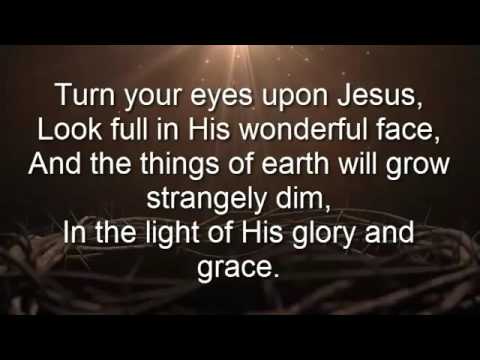 This word for behold "look at, gaze, behold; I see, experience, discern; I partake of," from theóreó, "to gaze, contemplate." It is unique in that the English words looking or seeing with the eyes can not describe its deeper meaning. It means to perceive, discern with the eyes, ascertain, find out, by seeing. When John saw Jesus passing by, he said, “Behold, the Lamb of God!”3 And when two disciples heard him say this, they went to "ascertain, find out," and followed Jesus. Behold, the author of salvation and faith, turn your eyes upon Jesus.
"looking to Jesus, the founder and perfecter of our faith, who for the joy that was set before him endured the cross, despising the shame, and is seated at the right hand of the throne of God."4
This word for looking aphoraó, from apó, "away from" and horáō, "look upon") – properly, "looking away from all else, to fix one's gaze upon." This looking is of faith, looking away from earthly things and looking upon Jesus, heavenly. Some have incorrectly used repentance as a means to salvation, but repentance is of the will of God, Paul writes, it is a fruit of righteousness. If having received the seed of righteousness I will, repent, or have a godly sorrow for my dead works. Jesus said to the "people" of God, repent for the kingdom of God is at hand. As Paul writes righteousness is through faith that it be according to grace, not of works of the Law, so that all who look upon Jesus shall be saved, those of the Law and those not. Turn your eyes upon Jesus, the founder, author of faith.
"Do not work for food that perishes, but for food that endures to eternal life, which the Son of Man will give you. For God the Father has placed His seal of approval on Him.”5
This word for work is ergon; it can mean to work, as a task, occupation, or refer to a worker who accomplishes something. It is from ergō, "to work, accomplish" mostly used as "works, deeds." Of course as Paul writes we receive righteousness by faith, not by works of the Law. But we see here the idea James writes of, faith that accomplishes deeds, or faith that accomplishes "deeds" of Love. We can not toil for it like earthly food, by physical labor, nor eat it like food that fills the belly. Jesus said believing is the work of God, and Paul writes He is the author of faith and salvation. We are to work for food the Son of Man will give us. Faith is substance and evidence of things unseen, of heavenly things.
"If I have told you earthly things and you do not believe, how can you believe if I tell you heavenly things?"12
We see, with Nicodemus, Jesus said something comparable. "Work for food that perishes, but for food that endures to eternal life" Food that perishes is earthly things and food that endures into Life is heavenly things. We see in believing the need for a separation of the earthly and the spiritual, thus it is not by works, that it be according to grace. This is faith, substance and evidence of things unseen, Paul writes. We see Jesus say this to Nicodemus and the people in the synagogue, whom many had witnessed the miraculously feeding of thousands, pretty much the same thing, "work for for food that endures to eternal life," It is by faith and such is the work of God, but by implication of work, such means to be engaged with, in thought, contemplation. We also see other things mentioned in both places.
"No one has ascended into heaven except he who descended from heaven, the Son of Man."13
Nicodemus wonders about being born again, how can I enter my mother's womb again? Jesus says he is trying to relate with earthly things. Being born of woman, earthly thing, being born of the Spirit of God, heavenly thing. "Descended from heaven," earthly thing, "Ascended to heaven," heavenly thing. To the disciples whom he had told to seek food that doesn't perish, who thought it a hard teaching to eat his flesh and drink his blood, he said, "what if you were to behold the Son of Man ascending to where he was before?"1 Again it is like comparing earthly things to heavenly things. Descended from earth; flesh, ascended to heaven; Spirit. If they do not believe earthly, fleshly, things how will they engage or eat food that is from heaven?
"The Spirit gives life; the flesh profits nothing. The words I have spoken to you are spirit and they are life."16
To the disciples he said the above. To Nicodemus He said, "That which is born of the flesh is flesh, and that which is born of the Spirit is spirit."6 It is the Spirit that makes this separation between the earthly and the heavenly. "The wind blows where it wishes, and you hear its sound, but you do not know where it comes from or where it goes. So it is with everyone who is born of the Spirit.”8 This is my salvation experience, I tried saying a prayer, raising my hand, going down to the altar, repenting, surrendering... None of these things worked, it was like the wind blowing, out of no where. What did I do to be saved?
"For everyone who asks receives; he who seeks finds; and to him who knocks, the door will be opened."6
Nicodemus knew Jesus was from God because of the miraculous signs He did.
"we know that you are a teacher come from God, for no one can do these signs that you do unless God is with him."5 When the people sought Jesus after seeing the feeding of thousands, He said, "it is not because you saw these signs that you are looking for Me, but because you ate the loaves and had your fill." Nicodemus saw the signs and thought he was from God, these people sought him for earthly things, the filling of their belly, someone to make king and deliver them from Roman control... They were not seeking heavenly things and Jesus did not intend to give such people the keys to the kingdom, He was seeking true worshipers of God.
"do you despise the riches of his kindness and forbearance and patience, not knowing that God’s kindness is meant to lead you to repentance?"9
This kindness is xrēstótēs "goodness, uprightness, kindness, gentleness." and is listed as a fruit of the Holy Spirit. The seed of righteousness is sown in peace, the fruit of righteousness being trust and rest, and sanctification. The gospel is delivered on shows of peace. We see how very, very important is how the gospel is delivered. Repentance means a "change in mind." Truly it was the kindness of God that led me to change my mind. Legalists and those with entitled mindsets despise the riches of His Grace. Fear nor condemnation, but God's love, as John writes, "We love because he first loved us."10 Fear is not a fruit of the Spirit, such a spirit of fear is of the devil, and it seeks to produce a worldly sorrow unto death, one of his greatest tools to destroy people. In the Spirit of God we receive power, love, and a sound mind.
"no one can see the kingdom of God unless he is born from above.”3
Nicodemus saw the signs and said "we know that you are a teacher come from God." Jesus responds one must be born of the Spirit. To the people who sought him because their bellies had been filled, He said, "It is the Spirit who gives life; the flesh is no help at all. The words that I have spoken to you are spirit and life. But there are some of you who do not believe.”63 So we begin to see a pattern, for salvation, it is a "beholding" or seeking the Son of God, which is not like working for earthly food or things, but seeking heavenly things. Believing is the work of God, and so is being born of Spirit, these are something experienced. What must I do? the only part we can do is to "behold the Lamb of God, who takes away the sin of the world."
"Yet a little while and the world will see me no more, but you will behold me. Because I live, you also will live."4
We see that this behold means much more than just seeing with the physical eye. It is beholding the glory of Christ, because He lives, we experience Life here on earth. "On that day you will know that I am in My Father, and you are in Me, and I am in you."5 This is the glory Jesus spoke of before the world existed, this oneness with the Father we experience, "the Helper, the Holy Spirit, whom the Father will send in my name,", we receive such a right, to the praise of His glory. From the riches of His glory He has bestowed upon us the right to be called children of God, with a heavenly father who loves us so much he gave His Son, for such an eternal purpose.
"And as Moses lifted up the serpent in the wilderness, so must the Son of Man be lifted up,14 that whoever believes in him may have eternal life."15
The Son of Man, Jesus, was lifted up, "that everyone who looks to the Son and believes in him should have eternal life." How can they believe if they have not seen? And how can they look if they have not heard? We see the sign of the cross, Jesus being lifted up. It is in the Resurrection that we as believers experience newness of Life, but it is in the cross, that we come to Behold, to contemplate, look, and to believe. "So must the Son of Man be lifted up," why must He be lifted up? "that whoever believes in him may have eternal life." A new covenant in His blood, a ministry of reconciliation, of peace, it is not a ministry of condemnation, "this is the judgment: the light has come into the world,"19 Those who love the light come to the Light.
“When you have lifted up the Son of Man, then you will know that I am He, and that I do nothing on My own, but speak exactly what the Father has taught Me."25
The resurrection is the sign that Jesus is from God. The sign of the cross is the sign unto salvation, "Behold the Lamb of God, that takes away the sin of the world." As the serpent was lifted up in the wilderness, Christ was lifted, so that all who behold, look upon Him, turn their eyes upon Him and believe will be saved. Jesus said, "If I have told you earthly things and you do not believe, how can you believe if I tell you heavenly things?"12 Look at the sign of the cross, see the heavenly out of the earthly. Behold, Jesus the founder of faith. It is the Spirit that draws men, as the Spirit revealed to Peter the words of Christ were eternal Life and He was the Holy One from God. The sign of the cross is a great testimony, Jesus being lifted up for our salvation.
"For God did not send his Son into the world to condemn the world, but in order that the world might be saved through him."17
Because of God's great love there is redemption, reconciliation, and peace, men can enter into His rest. The principle of truth applies, it is placed upon a lamp stand, "whoever does what is true comes to the light."12 Jesus is the Truth and the Light, he has been lifted up, placed on a lamp stand, like a lighthouse to those lost at sea, the Light guides them home. That light is in us, if Christ be in us, "You are the light of the world. A city on a hill cannot be hidden."14 We too, have "food" from the Father, to do His will. The light shines in us, pointing others to the Light, Jesus, who has been lifted up.
“For God so loved the world, that he gave his only Son, that whoever believes in him should not be lost but have eternal life."16
It is the will of the Father that none should be lost, that all who behold the Son and believes, will be raised up.18 We see the great signs to the children of God in the wilderness; the serpent lifted up, the rock that water flowed from, and the manna from heaven. Paul writes Moses wrote about Jesus, he surely did, in Him is living water and bread from heaven, real food to eat and drink for life. The gospel is delivered on the shoes of peace, all who are weary, all who are burdened, look upon the Son, he is humble and lowly at heart. “Come, everyone who thirsts, come to the waters; and he who has no money, come, buy and eat!"19 Eat the food that the Son of Man gives freely, it has much value, eternal Life. The sign of the cross points the way, because God so loved the world, the Son was lifted up, that whoever believes in him may have everlasting life.15
Turn Your Eyes Upon Jesus
Turn Your Eyes Upon Jesus, Instrumental
"looking to Jesus, the founder and perfecter of our faith, who for the joy that was set before him endured the cross, despising the shame, and is seated at the right hand of the throne of God."4
This word for looking aphoraó, from apó, "away from" and horáō, "look upon") – properly, "looking away from all else, to fix one's gaze upon." This looking is of faith, looking away from earthly things and looking upon Jesus, heavenly. Some have incorrectly used repentance as a means to salvation, but repentance is of the will of God, Paul writes, it is a fruit of righteousness. If having received the seed of righteousness I will, repent, or have a godly sorrow for my dead works. Jesus said to the "people" of God, repent for the kingdom of God is at hand. As Paul writes righteousness is through faith that it be according to grace, not of works of the Law, so that all who look upon Jesus shall be saved, those of the Law and those not. Turn your eyes upon Jesus, the founder, author of faith.
"Do not work for food that perishes, but for food that endures to eternal life, which the Son of Man will give you. For God the Father has placed His seal of approval on Him.”5
This word for work is ergon; it can mean to work, as a task, occupation, or refer to a worker who accomplishes something. It is from ergō, "to work, accomplish" mostly used as "works, deeds." Of course as Paul writes we receive righteousness by faith, not by works of the Law. But we see here the idea James writes of, faith that accomplishes deeds, or faith that accomplishes "deeds" of Love. We can not toil for it like earthly food, by physical labor, nor eat it like food that fills the belly. Jesus said believing is the work of God, and Paul writes He is the author of faith and salvation. We are to work for food the Son of Man will give us. Faith is substance and evidence of things unseen, of heavenly things.
"If I have told you earthly things and you do not believe, how can you believe if I tell you heavenly things?"12
We see, with Nicodemus, Jesus said something comparable. "Work for food that perishes, but for food that endures to eternal life" Food that perishes is earthly things and food that endures into Life is heavenly things. We see in believing the need for a separation of the earthly and the spiritual, thus it is not by works, that it be according to grace. This is faith, substance and evidence of things unseen, Paul writes. We see Jesus say this to Nicodemus and the people in the synagogue, whom many had witnessed the miraculously feeding of thousands, pretty much the same thing, "work for for food that endures to eternal life," It is by faith and such is the work of God, but by implication of work, such means to be engaged with, in thought, contemplation. We also see other things mentioned in both places.
"No one has ascended into heaven except he who descended from heaven, the Son of Man."13
Nicodemus wonders about being born again, how can I enter my mother's womb again? Jesus says he is trying to relate with earthly things. Being born of woman, earthly thing, being born of the Spirit of God, heavenly thing. "Descended from heaven," earthly thing, "Ascended to heaven," heavenly thing. To the disciples whom he had told to seek food that doesn't perish, who thought it a hard teaching to eat his flesh and drink his blood, he said, "what if you were to behold the Son of Man ascending to where he was before?"1 Again it is like comparing earthly things to heavenly things. Descended from earth; flesh, ascended to heaven; Spirit. If they do not believe earthly, fleshly, things how will they engage or eat food that is from heaven?
"The Spirit gives life; the flesh profits nothing. The words I have spoken to you are spirit and they are life."16
To the disciples he said the above. To Nicodemus He said, "That which is born of the flesh is flesh, and that which is born of the Spirit is spirit."6 It is the Spirit that makes this separation between the earthly and the heavenly. "The wind blows where it wishes, and you hear its sound, but you do not know where it comes from or where it goes. So it is with everyone who is born of the Spirit.”8 This is my salvation experience, I tried saying a prayer, raising my hand, going down to the altar, repenting, surrendering... None of these things worked, it was like the wind blowing, out of no where. What did I do to be saved?
"For everyone who asks receives; he who seeks finds; and to him who knocks, the door will be opened."6
Nicodemus knew Jesus was from God because of the miraculous signs He did.
"we know that you are a teacher come from God, for no one can do these signs that you do unless God is with him."5 When the people sought Jesus after seeing the feeding of thousands, He said, "it is not because you saw these signs that you are looking for Me, but because you ate the loaves and had your fill." Nicodemus saw the signs and thought he was from God, these people sought him for earthly things, the filling of their belly, someone to make king and deliver them from Roman control... They were not seeking heavenly things and Jesus did not intend to give such people the keys to the kingdom, He was seeking true worshipers of God.
"do you despise the riches of his kindness and forbearance and patience, not knowing that God’s kindness is meant to lead you to repentance?"9
This kindness is xrēstótēs "goodness, uprightness, kindness, gentleness." and is listed as a fruit of the Holy Spirit. The seed of righteousness is sown in peace, the fruit of righteousness being trust and rest, and sanctification. The gospel is delivered on shows of peace. We see how very, very important is how the gospel is delivered. Repentance means a "change in mind." Truly it was the kindness of God that led me to change my mind. Legalists and those with entitled mindsets despise the riches of His Grace. Fear nor condemnation, but God's love, as John writes, "We love because he first loved us."10 Fear is not a fruit of the Spirit, such a spirit of fear is of the devil, and it seeks to produce a worldly sorrow unto death, one of his greatest tools to destroy people. In the Spirit of God we receive power, love, and a sound mind.
"no one can see the kingdom of God unless he is born from above.”3
Nicodemus saw the signs and said "we know that you are a teacher come from God." Jesus responds one must be born of the Spirit. To the people who sought him because their bellies had been filled, He said, "It is the Spirit who gives life; the flesh is no help at all. The words that I have spoken to you are spirit and life. But there are some of you who do not believe.”63 So we begin to see a pattern, for salvation, it is a "beholding" or seeking the Son of God, which is not like working for earthly food or things, but seeking heavenly things. Believing is the work of God, and so is being born of Spirit, these are something experienced. What must I do? the only part we can do is to "behold the Lamb of God, who takes away the sin of the world."
"Yet a little while and the world will see me no more, but you will behold me. Because I live, you also will live."4
We see that this behold means much more than just seeing with the physical eye. It is beholding the glory of Christ, because He lives, we experience Life here on earth. "On that day you will know that I am in My Father, and you are in Me, and I am in you."5 This is the glory Jesus spoke of before the world existed, this oneness with the Father we experience, "the Helper, the Holy Spirit, whom the Father will send in my name,", we receive such a right, to the praise of His glory. From the riches of His glory He has bestowed upon us the right to be called children of God, with a heavenly father who loves us so much he gave His Son, for such an eternal purpose.
"And as Moses lifted up the serpent in the wilderness, so must the Son of Man be lifted up,14 that whoever believes in him may have eternal life."15
The Son of Man, Jesus, was lifted up, "that everyone who looks to the Son and believes in him should have eternal life." How can they believe if they have not seen? And how can they look if they have not heard? We see the sign of the cross, Jesus being lifted up. It is in the Resurrection that we as believers experience newness of Life, but it is in the cross, that we come to Behold, to contemplate, look, and to believe. "So must the Son of Man be lifted up," why must He be lifted up? "that whoever believes in him may have eternal life." A new covenant in His blood, a ministry of reconciliation, of peace, it is not a ministry of condemnation, "this is the judgment: the light has come into the world,"19 Those who love the light come to the Light.
“When you have lifted up the Son of Man, then you will know that I am He, and that I do nothing on My own, but speak exactly what the Father has taught Me."25
The resurrection is the sign that Jesus is from God. The sign of the cross is the sign unto salvation, "Behold the Lamb of God, that takes away the sin of the world." As the serpent was lifted up in the wilderness, Christ was lifted, so that all who behold, look upon Him, turn their eyes upon Him and believe will be saved. Jesus said, "If I have told you earthly things and you do not believe, how can you believe if I tell you heavenly things?"12 Look at the sign of the cross, see the heavenly out of the earthly. Behold, Jesus the founder of faith. It is the Spirit that draws men, as the Spirit revealed to Peter the words of Christ were eternal Life and He was the Holy One from God. The sign of the cross is a great testimony, Jesus being lifted up for our salvation.
"For God did not send his Son into the world to condemn the world, but in order that the world might be saved through him."17
Because of God's great love there is redemption, reconciliation, and peace, men can enter into His rest. The principle of truth applies, it is placed upon a lamp stand, "whoever does what is true comes to the light."12 Jesus is the Truth and the Light, he has been lifted up, placed on a lamp stand, like a lighthouse to those lost at sea, the Light guides them home. That light is in us, if Christ be in us, "You are the light of the world. A city on a hill cannot be hidden."14 We too, have "food" from the Father, to do His will. The light shines in us, pointing others to the Light, Jesus, who has been lifted up.
“For God so loved the world, that he gave his only Son, that whoever believes in him should not be lost but have eternal life."16
It is the will of the Father that none should be lost, that all who behold the Son and believes, will be raised up.18 We see the great signs to the children of God in the wilderness; the serpent lifted up, the rock that water flowed from, and the manna from heaven. Paul writes Moses wrote about Jesus, he surely did, in Him is living water and bread from heaven, real food to eat and drink for life. The gospel is delivered on the shoes of peace, all who are weary, all who are burdened, look upon the Son, he is humble and lowly at heart. “Come, everyone who thirsts, come to the waters; and he who has no money, come, buy and eat!"19 Eat the food that the Son of Man gives freely, it has much value, eternal Life. The sign of the cross points the way, because God so loved the world, the Son was lifted up, that whoever believes in him may have everlasting life.15
Turn Your Eyes Upon Jesus
Turn Your Eyes Upon Jesus, Instrumental