There was in a certain city a judge who did not fear God nor regard man. Now there was a widow in that city; and she came to him, saying, ‘Get justice for me from my adversary.’1
 A judge is someone who forms an opinion about something or someone through careful weighing of evidence and testing of premises.2 This weighing of evidence and testing of premises along with fearing God and regarding man is how we should discern. Jesus told them this parable of the unjust judge, then asks a question, when the Son of Man comes, will He really find faith on the earth? The Pharisees had asked Jesus, when would the kingdom of God come? He answered them and said, the kingdom of God does not come with observation; nor will they say, ‘See here!’ or ‘See there!’ For indeed, the kingdom of God is within you.3 This judge did not weight nor test for God's truth nor did he regard man.
Men always ought to pray and not lose heart. There was in a certain city a judge... This widow was persistent in seeking justice, something she had not received. This implies that the judge did not weigh the evidence and make a just judgement, nor did he care to as he did not fear the just judge nor regard her. He broke the greater commandment of loving God and the one like it of loving his neighbor as himself. This golden rule he did not regard. This word here for regard is defined as in turning, i.e. to turn one's attention to, used also of recoiling (turning away) in shame. But this widow would not take no for an answer and the judge at first would not give in to the widow, saying to himself, I do not fear God nor regard man, but because the end-goal, purpose of her is to give me a black eye, I will relent.4
Now God is a just judge. He puts down one and exalts another.5 He is the only just judge, as he sees and judges the heart.6 We must always remember this, he measures the heart. There is one lawgiver, who is able to save and to destroy: who are you that judge another?7 He is the righteous judge.8 He stands at the door of judgement.9 How we measure, he measures us. The heavens and the earth will judge us.10 Judgement will be in a righteous court of God, the facts will be presented.11 If an unjust judge is not fearing God then a just judge is fearing God and regarding man. I need to discern and make judgement, so how do I? By weighing of evidence and testing of premises along with fearing God and regarding man.
Principles in discerning. First, judge not lest you be judged... this is not to be done lightly.11 It is not that I can not ever judge, this is an important matter. Second, judge self first. Do not be a hypocrite. If I judge another for the same thing then I judge unjustly. I need to deal with the sin in my own life.11 Third, I must rely on God, the just judge. God's ways are not mine. He truly sees the heart, the big picture. I must seek his will. Know God measures the heart, how I measure others will be measured back to me. If I regard his laws then I will regard man, it is his law. Lastly, I can hold to other good principles. I am to be proactive at not letting the enemy destroy his children, even the least of these. This requires me to seek to understand first. When I operate to my own feelings or what I think I understand, I operate in sensuality.11 This is usually called cheap grace, but God's grace is not cheap, it is another form of walking in the flesh, but I do it under the "authority of God", such is as hurtful to people as legalism is.

God's will doesn't violate his principles, he gives us instructions on how to operate. If I have an issue with someone I go to that person privately. Forgiveness is an important principle of God. I need to be able to forgive or I will hold bitterness in my heart. As to others I seek to understand first. I do not make assumptions in judgement, such is of the enemy. I seek to understand, to see the heart. I presume innocence, gathering facts, and if there is reasonable doubt mercy triumphs. Because judgment without mercy will be shown to anyone who has not been merciful. Mercy triumphs over judgment.12 This is the presumption of innocence our court system is/was based upon and how we should operate. Unfortunately many are operating to their own sensuality, thus we as a society look guilty upon others, until they prove themselves innocent.
Discernment requires constant training and practice.14 Persistence and endurance is needed. Leaders must make decisions, being indecisive can be as dangerous as making wrong decisions. If we need to make a decision and can not discern, what do we do? Trust in God with all your heart and lean not on your own understanding.15 We lean on his understanding for discernment. But to be honest, sometimes I don't know, so when I discern to Biblical principles I am more likely to judge fairly. It is my understanding of these Biblical principles that can be the problem. Always pray and do not lose heart in living out God's principles; in seeking justice, loving mercy, and walking humbly with God.
Fear God and regard fellow man. Jesus said, the kingdom of God does not come with observation.16 We must not be so concerned with the end coming but how we get to the end. Begin with the end in mind. Be concerned with whether he finds us faithful, being persistent in our faith. When He does come will it be like the days of Noah, or Sodom, will He really find faith on the earth?
A judge is someone who forms an opinion about something or someone through careful weighing of evidence and testing of premises.2 This weighing of evidence and testing of premises along with fearing God and regarding man is how we should discern. Jesus told them this parable of the unjust judge, then asks a question, when the Son of Man comes, will He really find faith on the earth? The Pharisees had asked Jesus, when would the kingdom of God come? He answered them and said, the kingdom of God does not come with observation; nor will they say, ‘See here!’ or ‘See there!’ For indeed, the kingdom of God is within you.3 This judge did not weight nor test for God's truth nor did he regard man.Men always ought to pray and not lose heart. There was in a certain city a judge... This widow was persistent in seeking justice, something she had not received. This implies that the judge did not weigh the evidence and make a just judgement, nor did he care to as he did not fear the just judge nor regard her. He broke the greater commandment of loving God and the one like it of loving his neighbor as himself. This golden rule he did not regard. This word here for regard is defined as in turning, i.e. to turn one's attention to, used also of recoiling (turning away) in shame. But this widow would not take no for an answer and the judge at first would not give in to the widow, saying to himself, I do not fear God nor regard man, but because the end-goal, purpose of her is to give me a black eye, I will relent.4
Now God is a just judge. He puts down one and exalts another.5 He is the only just judge, as he sees and judges the heart.6 We must always remember this, he measures the heart. There is one lawgiver, who is able to save and to destroy: who are you that judge another?7 He is the righteous judge.8 He stands at the door of judgement.9 How we measure, he measures us. The heavens and the earth will judge us.10 Judgement will be in a righteous court of God, the facts will be presented.11 If an unjust judge is not fearing God then a just judge is fearing God and regarding man. I need to discern and make judgement, so how do I? By weighing of evidence and testing of premises along with fearing God and regarding man.
Principles in discerning. First, judge not lest you be judged... this is not to be done lightly.11 It is not that I can not ever judge, this is an important matter. Second, judge self first. Do not be a hypocrite. If I judge another for the same thing then I judge unjustly. I need to deal with the sin in my own life.11 Third, I must rely on God, the just judge. God's ways are not mine. He truly sees the heart, the big picture. I must seek his will. Know God measures the heart, how I measure others will be measured back to me. If I regard his laws then I will regard man, it is his law. Lastly, I can hold to other good principles. I am to be proactive at not letting the enemy destroy his children, even the least of these. This requires me to seek to understand first. When I operate to my own feelings or what I think I understand, I operate in sensuality.11 This is usually called cheap grace, but God's grace is not cheap, it is another form of walking in the flesh, but I do it under the "authority of God", such is as hurtful to people as legalism is.
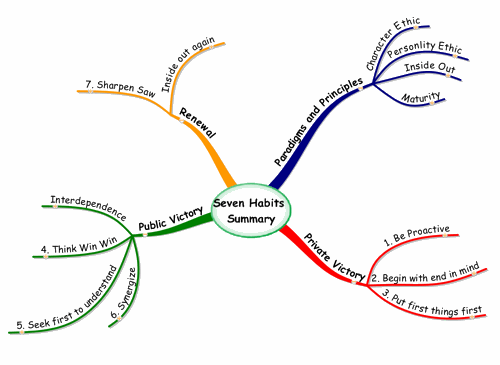
God's will doesn't violate his principles, he gives us instructions on how to operate. If I have an issue with someone I go to that person privately. Forgiveness is an important principle of God. I need to be able to forgive or I will hold bitterness in my heart. As to others I seek to understand first. I do not make assumptions in judgement, such is of the enemy. I seek to understand, to see the heart. I presume innocence, gathering facts, and if there is reasonable doubt mercy triumphs. Because judgment without mercy will be shown to anyone who has not been merciful. Mercy triumphs over judgment.12 This is the presumption of innocence our court system is/was based upon and how we should operate. Unfortunately many are operating to their own sensuality, thus we as a society look guilty upon others, until they prove themselves innocent.
Discernment requires constant training and practice.14 Persistence and endurance is needed. Leaders must make decisions, being indecisive can be as dangerous as making wrong decisions. If we need to make a decision and can not discern, what do we do? Trust in God with all your heart and lean not on your own understanding.15 We lean on his understanding for discernment. But to be honest, sometimes I don't know, so when I discern to Biblical principles I am more likely to judge fairly. It is my understanding of these Biblical principles that can be the problem. Always pray and do not lose heart in living out God's principles; in seeking justice, loving mercy, and walking humbly with God.
Fear God and regard fellow man. Jesus said, the kingdom of God does not come with observation.16 We must not be so concerned with the end coming but how we get to the end. Begin with the end in mind. Be concerned with whether he finds us faithful, being persistent in our faith. When He does come will it be like the days of Noah, or Sodom, will He really find faith on the earth?